Showing posts with label mission statement. Show all posts

Monday, May 17, 2021

Transportation for Pastors

 (This post is part of a series on S4P's mission statement. Here's a link to introduce you to the series.)

We’ve been talking about all of the branches of the Sowers4Pastors ministry, and today we’re focusing on Transportation for Pastors. It is often referred to as the motorcycle ministry, but it does include horses and mules, too. This week, we’re going to hold the horses, but it is time for the latest batch of motorcycle distributions - and the current one is a doozy!

Motorcycles arriving at the S4P compound by truck - there was also a third truck that had already dropped off its load!

In 2006, Sowers4Pastors was approached by a group wanting to know if they’d be interested in distributing a few motorcycles to pastors. At the time, they had no idea what a huge blessing that would be.


It’s no secret that Allen is a big believer in giving a hand up instead of a hand out. That’s why, in order to be good stewards of their funds, Sowers4Pastors requires that the pastors who receive a motorcycle, horse, or mule pay for a portion of the total cost. Depending on the size of the motorcycle, a pastor might pay anywhere from 40-55%. Essentially, they are showing that they will be able to maintain a motorcycle and pay for the cost of fuel. Plus, this system allows Sowers4Pastors to help almost twice the number of pastors obtain transportation. 


This week, they handed out 33 motorcycles! This batch will bring the ministry’s total up to 328 motorcycles and 71 horses or mules. The motorcycles and four-legged modes of transportation are changing the lives of pastors and the communities they serve. In case you’re wondering why horses/mules are ever preferable, it’s because some pastors live and work in areas where the terrain is too rough for a motorcycle, even the ones that tend to be more like dirt bikes.


A single motorcycle lasts a pastor an average of 10 years and keeps him from walking 50,000 miles. Sowers4Pastors sees a lot of pastors who are able to go on and plant another church or two during that 10-year period. Let that sink in. For part of the cost of a motorcycle, your contributions to Sowers4Pastors can have a hand in planting a new church. 


Carter handing out helmets, while Russell does paperwork

Allen said, “Thank those people who have partnered with us! What a blessing it is. People don’t realize that in a place where most everybody walks everywhere that the motorcycle makes it possible for them to do so much more. They are like the circuit pastors in pioneer days who would ride around and teach in different towns. Some of these pastors do that on a weekly basis. With a motorcycle, they are able to reach another village or two. It has been very impactful. It is a blessing to pastors and to the communities who receive the benefit of having a pastor.”


Most of the motorcycles are going to denominational supervisors, church planters, evangelists, and some church leaders. A single supervisor can oversee 20 churches. On foot, they couldn’t reasonably visit each church more than once a month. Now, they know they can be wherever they are most needed on any given day. 


One of the things COVID changed is that a lot of pastors have put new emphasis on home visitations. Reliable transportation to visit members allows them to make sure needs are being met.


-posted by Christi.


Thursday, May 13, 2021

Feeding Centers and Sponsorship Programs

 (This post is part of a series on S4P's mission statement. Here's a link to introduce you to the series.)

Get out your paper and some colored markers because it’s Venn diagram time. If you don’t have a compass, you can freehand your circles or trace around a glass. Draw two overlapping circles. Got it? Now, write FEEDING CENTERS in one circle and SPONSORSHIP PROGRAM in the other. In the overlapping part in the middle, you can go ahead and write BOTH. You can fill in the circles as you read, but let’s make the first entry as a class. In the middle, overlapping part which is embarrassingly just called an intersection, write in EMPOWER PASTORS. 

The feeding centers predate the sponsorship program. They are set up and continue to run hither and yon over a large swath of Western Honduras. These feeding centers are operated by individual pastors out of their own churches. Sowers4Pastors provides the food and collects the records of how it is used. That’s it. Other than that, the feeding centers are completely pastor driven. If a pastor determines there is no longer a need in the community or if he just doesn’t have time, he can close the center. 


COVID had a huge effect on the feeding center program because the need grew exponentially. New pastors came out of the woodwork because their communities needed food. Pastors in existing programs needed more food for their communities. But, generally speaking, the feeding center program is quiet. There aren’t a lot of pictures because there aren’t a lot of visits to these centers. Some are extremely small and remote. One center might only have a dozen kids. There are some places that Sowers4Pastors have never visited due to their remote locations.


In 2015, Kim Hall had the idea to begin a sponsorship program using some of the feeding center programs as home base. Sowers4Pastors did it as a trial with one location. There are some requirements that make a feeding center program a potential sponsorship program:


  • The center can’t be too remote because there will be regular visits. 

  • There must be a large enough number of children to make it cost effective to visit often.

  • The center must have a pastor who wants to put in a lot of time and effort to make this happen. Sponsorship centers require a lot more work and none of the pastors are doing this for pay. They are seeing growth in their churches. Communities are changing because more kids are going to school. 


A lot of research goes into opening a center. The backpack and shoe distributions don’t necessarily happen at feeding centers, but they may. (That little factoid is wreaking havoc with my Venn diagram!)


There are lots of pictures and videos of the sponsorship programs because kids are cute and it’s always fun to see them receiving backpacks, etc. For lack of a better term, sponsorship programs are a bit flashier than their more introverted cousins, the feeding centers. But that doesn’t change the main purpose of both, which is still empowering pastors!


A lot of people love the sponsorship program - and what's not to love? So many pictures of so many kids getting backpacks and going to school and learning about Jesus - but S4P want people to remember that ultimately that's the point - using the sponsorships and the feeding programs to get kids in touch with pastors who can point them in the right direction spiritually. The staff at S4P and Manna4Lempira thank you for your involvement in that process!


-posted by Christi.


Monday, April 26, 2021

The Bible Bookstore and Gifts for Gracias

 (This post is part of a series on S4P's mission statement. Here's a link to introduce you to the series.)

If you go to the homepage on the Sowers4Pastors website and click on the drop down tab labeled “What We Do,” you will see a lot of really cool branches of the ministry. But you’re not seeing everything. It’s like going to a music concert where everyone is singing along with the Top 40 hits, but only the hard core fans are still singing the lesser known songs. It’s not that the lesser known songs aren’t as good. They just never got as much air time and publicity. Today, it’s time to talk about a couple of ministry branches that are every bit as worthwhile as the ones that make it onto the Sowers4Pastors’ Greatest Hits album. Let’s hear it for the Bible bookstore and Gifts for Gracias. Feel free to mouth the words or hum along if you’re a long-time fan and you know what’s coming!

The Bible Bookstore

When Allen and Russell go out to visit churches, they often ask the question, “Who here has a Bible?” Depending on the location, there might be three raised hands. Then they ask to see the pastor’s Bible. Again, depending on the location, it might be a plain Bible with no concordance, footnotes, etc.

All books are expensive in Honduras and the purchase of books isn’t generally a high priority for a family struggling to survive. A typical study Bible in Honduras would cost about $80. That’s not pocket change for most of us, but it’s about a month’s wages for the average Honduran family.


Allen found a supplier who sells him Spanish Bibles and study materials wholesale. Sowers4Pastors then sells the materials with no markup. Through the Bible bookstore, pastors and anyone else have the opportunity to purchase a beautiful study Bible for $20. That’s still a week’s wages, but it’s quite an improvement. The bookstore contains study Bibles, other study materials, Bible Dictionaries, and concordances. There are even materials to help pastors learn how to minister. Since its inception over 14 years ago, more than 40,000 Bibles and study materials have been sold or given away through this humble bookstore.

Gifts for Gracias

Another ministry that doesn't frequently get the spotlight (at least, not anymore) is Gifts for Gracias, and it comes with a brief history lesson. Some of you might recall Gifts for Guanaja. Allen and Trish started Gifts for Guanaja back when their family lived on the island. Gifts for Guanaja started as a shoebox ministry. Churches in the States would send shoeboxes for kids filled with toys, socks, toiletries, etc. You know the type. Guanaja is a small island and Allen and Trish were able to distribute shoeboxes to all of the children in their town. 
Being the forward thinkers they are, when they moved to Gracias, a name change seemed in order. When they moved from Guanaja to Gracias, they brought about 800 filled shoeboxes with them. Now that they weren't on an island, the communities were a lot bigger and there wasn’t nearly enough to distribute to everyone, so Allen began reaching out to pastors. He went from town to town, seeking out pastors and leaving shoeboxes for their children, which helped him meet a lot of pastors in a short time. 


Eventually, this program changed. The shoeboxes grew into Home Depot boxes filled with donated clothing and household goods. If you’ve ever filled a box of backpacks, you know that Sowers4Pastors asks that used clothing donations be packed around the backpacks to utilize every fraction of an inch of shipping space. Those donations find their way to Gifts for Gracias, along with plates, pots, sheets, and other miscellaneous household items. These are the ministry’s Christmas gifts to the pastors and their families (though the scheduling works out that they get the presents in April and May, go figure), so Sowers4Pastors makes a point of giving them the nicest donations they have.

Supervisors of the various denominations give Allen lists of the pastors working under them. Right now, that number is up to about 300. Each of the pastors' children also receive filled backpacks. Many of the pastors in the area are 2nd generation church leaders. The idea here is the same as with the backpacks the kids in the sponsorship program receive. The hope is the more kids have access to school supplies their families might otherwise be unable to afford, the longer these kids stay in school. With so many kids growing up to follow in a pastor parent’s footsteps, it’s extra important for these next generation pastors to receive as much education as possible. The Sowers feel blessed to be a part of helping improve that cycle.


- posted by Christi

Monday, April 19, 2021

Building Roofs Through Sweat Equity

 (This post is part of a series on S4P's mission statement. Here's a link to introduce you to the series.)

“Back in my day I…,” or, “When I was a kid I…” If you are over a certain age, odds are good that you have uttered at least one of those phrases a time or two. If you are over a certain age and have children, your kids can probably fill in after the ellipses. Perhaps your version ends with “...had to work for what I got,” or “...didn’t have everything handed to me on a silver platter.” That is what is known as “sweat equity,” and it is still alive and well in the Sower4Pastors ministry. 


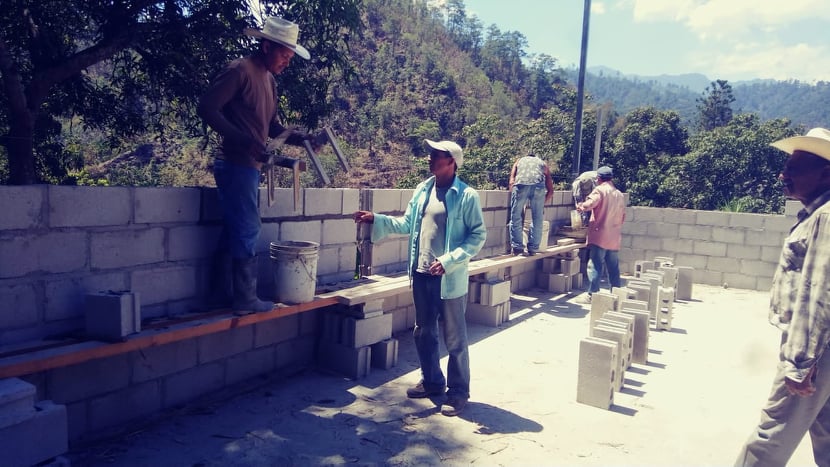
One of the ways Sowers4Pastors empowers pastors is by helping with church construction projects. But new churches aren’t handed over on a platter, silver or otherwise. When a pastor shows up requesting help with a church building project, Allen and Russell keep the attention on the roof. Church building projects are primarily in rural areas and the churches are told they must provide the land, labor, and all of the materials except roofing materials. Allen describes the process as “labor intensive.” 


Sowers4Pastors loves when a congregation comes to them and says they’ve grown as a home church or that they started out in a much smaller building and no longer have enough room to meet. Sometimes a congregation wants to turn the smaller building into a designated Sunday school building and build a larger sanctuary. The idea behind the church construction ministry is to come alongside congregations that are ready to work. It simply isn’t as successful to build a church with no people there. 


There is an emphasis on ownership. It is the congregation’s church. They buy the land, build the walls, and everything else except for buying the roofing supplies. The roofs cost an average of $1000 each. Sowers4Pastors has seen some churches that don’t even put down a floor before they start meeting. Yet, when Allen and Russell pay a visit a year or so later, often the packed dirt has been replaced with ceramic tiles. 


Churches generally approach Sowers4Pastors when they have about 60 people attending regularly and want to have the space to grow to accommodate 250 people. By making sure that each congregation has sweat equity in their building, Sowers4Pastors’ ministry funds stretch that much farther, and also insures that the congregations will feel a sense of ownership, which usually leads to better care and concern for the church building.


In the past, whenever Sowers4Pastors has tried to do the construction projects differently, there have been issues. This way, they can easily spot the motivated churches, and, since each congregation owns its own church building, there are no calls to repair things that break. This is not to say that there’s never a time for building a church first when starting a church plant, but in this area, the risk of no one coming to fill up the empty seats is too great. It all goes back to stewardship, sweat equity, and a general lack of silver platters. 


- posted by Christi.


Monday, April 12, 2021

Pastor Training School: Part of this Complete Mission Statement

(This post is part of a series on S4P's mission statement. Here's a link to introduce you to the series.)

When you were growing up, how many times did you beg your mother to purchase the latest sugary cereal? She may have ignored your cries of, “But, Mom, it’s part of a complete breakfast! It said so on TV!” Sowers4Pastors is a lot like a “complete breakfast.” Some parts are a little flashier than others, but it all works together to support their mission statement.

Pastor training school is a key component in the Sowers4Pastors mission to empower pastors. It doesn’t have the “wow factor” of delivering backpacks. The pictures probably don’t spark the same warm fuzzy feeling you get when you see pictures of kids in feeding centers. But it is “nutrient rich” and absolutely essential. Before settling on a ministry “menu,” Allen and Trish spent plenty of time seeking advice from other missionaries. The big question was, “What’s the most needed thing?” They didn’t want to move into town and offer the missionary equivalent of a big bowl of Crunchy Sugar Loops since the area undoubtedly needed something more substantial. One of the answers they received was, “training for pastors.”

Allen saw that the pastors in the area had a love of Jesus, but they didn’t have a lot of training. Sending the pastors off to seminaries would have been cost prohibitive and it would have meant the pastors would be abandoning their flocks. Plus, few of the pastors in the area have enough education to waltz right into a seminary. But they don’t need seminary degrees to establish a stronger foundation of biblical knowledge. A local training school seemed like the answer, but Allen’s gifts aren’t in teaching.

As it turned out, one of the indigenous missionaries the family spoke to before deciding to settle in Gracias was Dr. Julio. Dr. Julio, a Honduran-born medical doctor, was preparing to go to Peru to begin a pastor training school there. When that opportunity didn’t come to fruition, Dr. Julio was available to take on the teaching role of a training school while Allen handled the administrative side of things.

The students would arrive for three days of training, once a month, so they would not be kept from their livelihoods or their flocks for too long. They received 16-20 hours of classroom training in eight sessions per year. Training school operates from March-October, allowing the pastors to work the coffee harvest.  

To date, 125 pastors have graduated for the three-year program. Fifteen pastors have gone on to complete a fourth year. Over time, the school developed a mentoring system, with the second-year students assist in teaching the first-year students, and the third-year students assist in teaching the second-year students.

The results of this program, according to Allen, have been remarkable. Many of pastors have gone on to become district supervisors for their denomination. The congregations are benefiting from improved teaching, as well. Pastors were sticking to very basic teaching before - mostly the Gospel message and some passages of the New Testament. The teaching the pastors have received at the training school have enabled them to expand their preaching to include more difficult topics in the New Testament, and the relationship between the Old Testament and the New.


For several reasons, the school has been closed down for most of 2020. Obviously, COVID-19 was one reason. The school has not been able to reopen due to the ongoing lock-down in Honduras (which is slowly starting to ease), but, thanks to the trickle-down method of educating, local pastors who have completed more training are able to share their knowledge with pastors who aren’t as far along in their training.

In the meantime, Clay Powell, the head teacher of the program, had to return to the States with his family. He will not be able to return for several years. This leaves the school without a seminary trained teacher.

Allen has requested that people add this to their prayer list, that once the COVID-19 restrictions are lifted a teacher with the right training and temperament might hear the calling to join the ministry. Please join the crew at Sowers4Pastors in praying that this need might be filled.


- posted by Christi.

Monday, April 5, 2021

S4P: the Retrospective and the Road Ahead

If someone were to make a documentary about Sowers4Pastors, it would probably begin something like this:


In 2001, the Sowers family moved to the island of Guanaja in Honduras for “a couple of years” in response to Hurricane Mitch. Sometimes time just gets away from you because here it is 20 years later and Honduras is still home for quite a few Sowers. 


The Sowers family right before heading to Honduras


Allen, Trish, and their passel of young ‘uns ended up on the islands for five years. The plan had been to help build local infrastructure (hence the plethora of tools in the photoshoot above), but while they were there, they also ended up doing much more traditional evangelism at a local youth center. They lived in the community they served. They ran a weekly Sunday school program and held Sunday services for adults. Their evenings were filled with different events for children and youth, which included Bible lessons and a time of worship. They were pretty much what you think of when you think of foreign missionaries. But, after five years, they knew it was time to move to the next thing. 


They could have gone anywhere! Anywhere in Honduras, that is. Why did they need to stay in Honduras instead of heading for a different country? Three letters. B-E-N. Even though he was (and is) very much a part of the Sowers family, Allen and Trish were unable to legally adopt him. They could take him to another area of Honduras, but they could not take him out of the country. Rather than resort to throwing darts at a map in search of a new home, they piled in a vehicle and headed off on a family vacation to see where they felt God wanted them to work. 


The trip took them to 15 of Honduras’s 18 departments (which are like states in the U.S.). They visited with other missionaries along the way and felt that they were being called to empower pastors. 


Allen thought, “What if we could empower 25-50 pastors?”


The family first felt called to check out La Esperanza. With its high altitude, the city is famous for having the coolest climate in Honduras. This was particularly appealing to Allen, who doesn’t care for the heat and they were looking for a place where they could survive long-term. But when the family visited the city, they learned that Trish’s asthma doesn’t care for the high altitude. Also, they discovered that La Esperanza was already home to eight other missionaries.


When they finally visited Gracias, they met two indigenous missionaries who were talking about ways to help empower pastors. The road seemed clear. It took about nine more months to complete the move.


Shortly after the move, Allen began thinking about the 800 or so filled shoeboxes that were heading his way. On the island, distribution had been easy. In Gracias, he had no idea how to choose which children would receive a shoebox. Allen feels that God led him to the conclusion that he should reach out to the pastors and say, “We don’t have enough for everyone in the congregation, but we have enough for your kids.” 


With a supply of shoeboxes labeled for older boys, younger boys, older girls, and younger girls, Allen headed down the road with one of the indigenous missionaries. Whenever someone approached, they asked if that person knew of a pastor.


Within two months, Allen had met 185 pastors--dwarfing his original projection of working with 25-50 pastors. Since that time, the ministry has grown to the point where it works with close to 1000 pastors. There has been a lot of attention on the sponsorship program, but Sowers4Pastors wants you to know that they have never lost sight of their primary focus of empowering pastors. 


Some of you might recognize this photo - it gets a lot of mileage. It's a photo of the family a little while after they moved to Gracias


In the coming weeks, we’ll be talking about this topic in greater detail, but here are the top 5 ways Sowers4Pastors is empowering pastors:


  1. Pastor training school (link to the post here)

  2. Operating a wholesale Bible book store to sell discounted Bibles and other materials (link to the post here)

  3. Helping pastors get transportation (link to the post here)

  4. Putting roofs on churches (link to the post here)

  5. Helping the pastors set up feeding centers and sponsorship programs as a vehicle to reach out to their communities (link to the post here)

  6. The Gifts for Gracias project (link to the post here)


The crew is recognizing more and more as they pass the 20 year mark on their ministry that they are working with people who don't know the background of the ministry. Sometimes they interact with people who only know the sponsorship program, but to the Sowers the sponsorship program is another tool to help them empower local pastors. They view it as a way to help empower the next generation of pastors and church leaders, by helping them get a better education as kids than they would have otherwise. More importantly, the sponsorship program is helping the local pastors lead people to Jesus. Only God will know how many individuals - including future pastors - come to that commitment through this program. The Sowers family feels so blessed to be a part of this! And they feel blessed to have you as their partner!


- posted by Christi.