Showing posts with label partnering with pastors. Show all posts

Thursday, September 5, 2024

Building Hope, One Church at a Time

What comes to mind when you picture a church building? Maybe you envision a traditional sanctuary with stained glass windows or a sleek, modern space with a children’s wing that feels like it belongs in Disneyland. You might even recall the old finger game, “Here’s the roof. Here’s the steeple. Open the doors and see all the people.” Whatever you imagine, it probably includes a roof and doors—basic features we often take for granted. But in Honduras, a roof, doors, windows, a solid floor, and even bathrooms aren’t always part of the package.

Today, Brandy shares the stories of three Honduran pastors whose churches Sowers4Pastors has partnered with, transforming simple structures into true sanctuaries.

Church #1: Saving a Church on the Brink

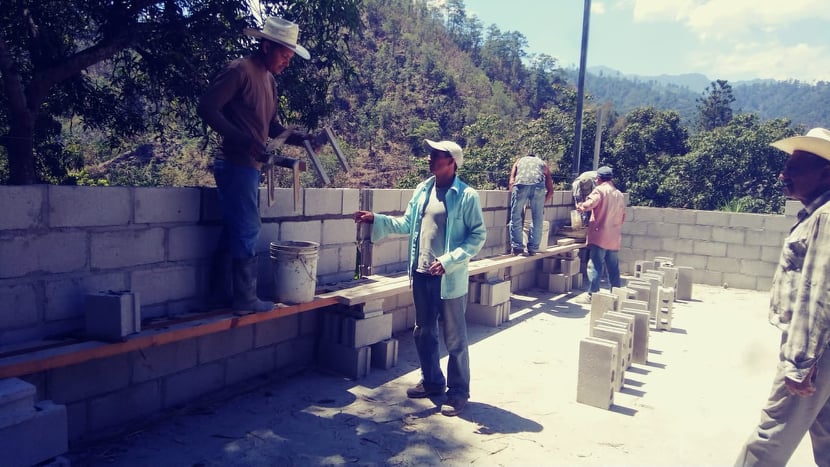
Perched on a small mountain in Guacutao, a church building faced a serious threat last year when heavy rains triggered mudslides that began to bury the building. Water also seeped under the church, eroding its foundation. The congregation started building a retaining wall, scraping together what funds they could through donations from the church members and local fundraisers. But with limited resources in a village where everyone's income is low, they only managed to complete about a third of the wall before they decided they needed to reach out to Sowers4Pastors for help.

When S4P saw the situation, they immediately offered funds for materials. Brandy and Rachel expected someone to pick up the money the next day, but within an hour, two church leaders arrived on a motorcycle, ready to save their church. The brothers explained that they had been praying for these funds because their church was at risk of sliding away if they didn’t act fast.

The very next day, Brandy drove by the church and saw the congregation already unloading materials to complete the retaining wall. They weren’t wasting any time!

Church #2: A Faithful Few in Lemanal

In Lemanal, a little church was built with concrete blocks, but it lacked flooring, electricity, and a bathroom. For two years, the congregation relied on a rotating cast of interim pastors, none staying long enough to establish roots. But one woman remained steadfast. Ludiz Gonzáles held the key to the church and was always there, even when no pastor showed up. On those days, she would open the doors and lead the congregation in prayer, urging them to keep faith alive.

The church in Lemanal

Lemanal is a community where many of the men have emigrated to the U.S., leaving few hands to help with building projects. The church has been trying to construct a bathroom for two years, collecting sand from a distant river and digging a hole for the septic tank, but they lacked the manpower and funds to complete the job.

Under Ludiz’s leadership, the children’s ministry has flourished, growing from 10-15 kids to 45. She even started teaching Bible lessons in the local school, and the church is growing in other ways, too. Brandy hadn’t realized the church was without a bathroom until the last VBS program. Moved by the situation, he contacted Lighthouse Church, who agreed to partner with them to finish the project. When Ludiz received the news, she cried tears of joy.

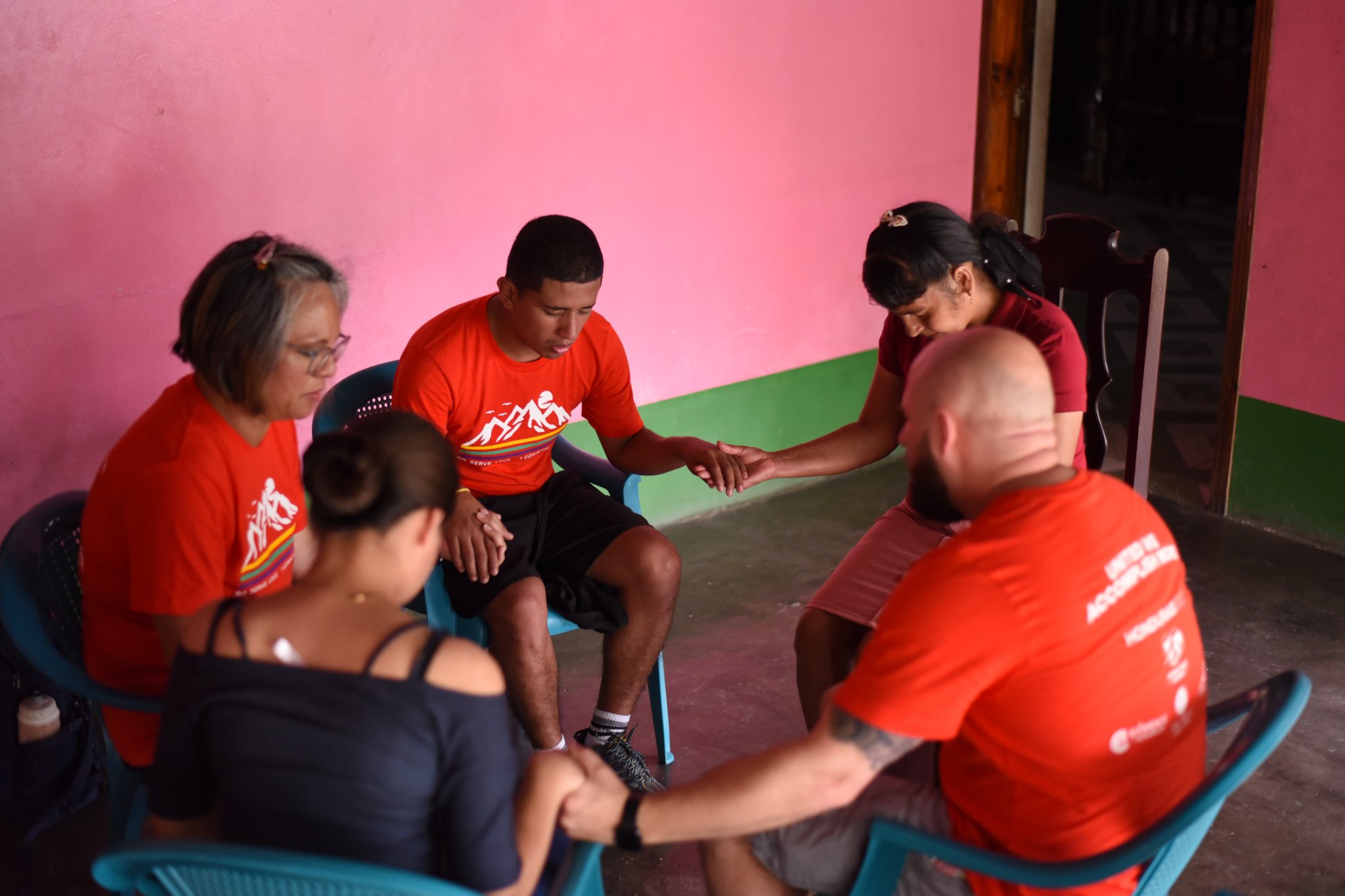
Worship at Lemanal
(Picture taken when the LH team was visiting)

Church #3: Half a Roof, Full of Faith

Near San Pedro Sula, another little church has been under construction for four long years. Pastor José Briones managed to get the walls up, and last year they added half a roof. Yes, you read that right—the congregation has been worshiping under half a roof! Imagine attending service while rain pours in and the wind whips around you.

Pastor José, being from an area four hours away from Gracias, had never heard of Sowers4Pastors, but a mutual contact introduced him to the ministry so he could ask for help. Last week, S4P approved Pastor José's request for assistance, and the congregation didn’t waste any time. The beams are already in place, and the roof is expected to be completed this week. Pastor José sent an emotional audio message to S4P, filled with gratitude. “Thank you” doesn’t seem to cover how much this means to them after all this time.

Help These Pastors Build More Than Walls!

These stories are just a glimpse of the impact S4P’s Church Construction program can have. Please consider donating — every bit helps, and the difference it makes is monumental. It only takes $1200 to complete the typical church roof in a Honduran village.

- posted by Christi


Friday, August 2, 2024

Introducing: Yo Soy!

Sowers4Pastors is pleased to introduce a new program... except it's not so much a new program as a new name for the old sponsorship program. Instead of just calling it the “Sowers4Pastors Sister Church Sponsorship Program,” which never exactly rolled off the tongue, its name is now "Yo Soy."

The sponsorship program, which is currently made up of seven different programs across twenty-four different communities, has been a single but vital element of the S4P ministry for several years now. Just for a quick refresher, this project works by connecting US churches with Honduran communities, helping children get resources to go to school, feeding them with enriched rice, and empowering pastors and community leaders with Sunday school materials so the children are exposed to the Gospel. And it will continue as it has, but with a new identity and a more precise vision of what the ministry is trying to accomplish for the children and the kingdom of God.

There’s capacity for growth in the focus and purpose of this program and S4P is working to deepen what they’re doing. Rachel shared, “We have been working to improve some areas, to focus in on the ministry to the children themselves and working closer with the community leaders. What we do in this ministry is so different from our other ministries, like helping with church roofs and purchasing motorcycles. This is very labor intensive. With the children, we’re trying to see something sown in them on a weekly basis. It’s a big commitment.”

"Yo Soy" is Spanish for “I am.” When Rachel and Brandy first had the idea of officially transforming the sponsorship program into a sort of sub-ministry with a name of its own, they asked Alejandro and Secia to help with the brainstorming process. They wanted it to be something the kids can identify with. Sowers4Pastors Kids was considered and later vetoed because it was in English and didn’t seem very kid-friendly (as in, it doesn't roll off the tongue any better than "sister church sponsorship program). "Yo Soy", on the other hand, encapsulates what they hope to impart on the children. Yo Soy. I am. I am loved. I am chosen. I am a child of God. And, as God said to Moses, “I AM that I AM.” 


Rachel shared that many of the kids come from broken homes. Some come from many generations of broken homes. Some of the families are large, though it was never the intention of the parents to have many children. The woman who assists Rachel around the house told her that she has many times seen people trying to give away a child they didn’t want the same way you might give away a litter of kittens. Just imagine the impact that has on the child who grows up thinking, “My own mother didn’t want me.”

Many of the children in Yo Soy don’t feel wanted or loved in their homes. Many of the parents grew up like that, too. They are now prisoners of their own limiting beliefs. Rachel talked about the many times the adults say things like, “I could never do that.” They don’t see a way out of this cycle. Yo Soy is trying to change that for the next generation. If you are a child of God, who are you to say you can’t do something He has called you to do?


Apart from helping the kids, Yo So is also intended to help the pastors and teachers giving the lessons. The idea is that having a name will also give them a clear identity and purpose. “It can help them focus and feel like they are part of a team,” said Rachel.


Sowers4Pastors asks for prayers as Yo Soy continues to grow and reach new children. There is the hope to expand deeper into the nearby communities. Pray that the kids will be receptive to the lessons the ministry is trying to sow in them. Pray for S4P to focus energy, time, and resources into the things the great I AM wants for them.


- posted by Christi.


Wednesday, June 26, 2024

Checking in with the Feeding Centers

Esdras is taking this time in the middle of the year to reflect on the feeding centers–on how much they are growing and how Sowers4Pastors hopes they will continue to grow in the future. 

A goal this year for S4P was to visit each feeding center. Esdras reflected on that by saying, “Each time I have visited a feeding center, it has been an opportunity to see how God is impacting the lives of these kids.”


Usually, pastors pick up the rice themselves, sometimes driving as much as four hours. Because of this, S4P staff has to make an effort to see the feeding centers in action. Visiting each center brings home the importance of this part of the ministry. 


Esdras said, “You can see the kids growing in the Word of God. At the same time, we can see that the pastors are doing a great job.” 


S4P provides fortified rice for the centers, but the pastors often add eggs or beans to the rice. Or sometimes they use the rice in a pot of soup. The food is not only nourishing the children physically, it is a way of enticing more children to attend Sunday school.


“Some kids don’t want to go to Sunday school,” Esdras said. “It’s not attractive to them. Some kids may just come for the rice. But during the time the pastors give the rice, they are also able to share the Gospel. The kids may come for one thing but they go home with the most important thing – the Gospel! Our goal is to get more feeding centers because we consider how important the program is. This year we have added thirty centers. For the rest of the year, we are looking for more pastors who can share the love by sharing the Gospel through rice. We praise God for those pastors.”


Esdras went on to talk about the fact that it is not Sowers4Pastors’ job to run each feeding center. All the feeding centers scattered throughout the rural parts of Western Honduras, that simply wouldn’t be a possibility. S4P’s job is to empower the pastors so that the pastors can then spread the Gospel to their communities. If the pastors were not serious about that, the whole thing would fall apart. 


The goal is to add another thirty feeding centers to the program in the coming months. Esdras would like to share that Sowers4Pastors regularly prays for the people who make the feeding centers possible. 


“We are thankful for every sponsor, for every donation, for every person that God put on their heart to help with the rice. Thank you so much for making this possible,” Esdras ended.


It will be exciting to see what the second half of 2024 has in store for the feeding centers.


- posted by Christi


Thursday, April 4, 2024

Strike Up the Mariachi Band!

Brandy and Rachel took time during Holy Week to talk about Father’s Day. (You didn’t see that one coming, did you?) Father’s Day in Honduras is celebrated on March 19th. Yes, it’s always on the 19th, which means that this year it fell on a Tuesday. It’s a day that doesn't generally garner the same kind of attention that Mother’s Day does. But today, let’s talk about the importance of fathers.

This year, Brandy and Rachel had a small celebration with the Crosspoint team in honor of Father’s Day. They bought a cake (which Brandy declared to be delicious) and some Cokes. Alas, there was no mariachi band! They explained that, in Honduras, Mother’s Day is often observed with a mariachi band coming to the house to play for mom. The bands are booked up on that day so it’s perfectly fine if the band shows up at 4:00 AM to let mom know that she is loved! (Trish has previously stated she is quite okay with not partaking of this particular holiday tradition.) But, even more so than in the States, Father’s Day doesn’t receive the same fanfare. 


Brandy shared that, in Honduras, it is becoming more and more commonplace for the man of the family to move to the big city or even a different country in pursuit of money, especially among the desperately poor. The idea is supposed to be that the men send money home to their families, but what often happens is they end up starting a new family in their new location, while their wife and kids are left to fend for themselves. Even when the father is consistent about sending money back, no amount of financial gain is going to make up for children living with absentee fathers. The ramifications include things like girls getting pregnant when they are very young and drinking among the boys, as well as a tendency to perpetuate the cycle.


Growing up with a father who wasn’t always in the house is something Brandy can relate to. His father was away serving in the military and Brandy and his four siblings were raised by their mother. It was difficult for her, and it meant that the kids were often left to their own devices while she was working at part-time jobs. Brandy’s older brother was sometimes in charge. Rachel still wonders if a mysterious bump on Brandy’s head is something he was born with or if it happened the time he fell off a roof! Brandy remembers a time he was left in charge of a little sister. He remembers taking the powdered milk reserved for the baby and making a bottle for the baby and a glass as a snack for himself. Rachel has been in the family for years now and she said that previously untold stories of what really happened while Brandy and his siblings were home alone still come out when they get together. 


Being a single mom is hard pretty much anywhere, but it’s even more difficult in rural Honduras, where the women don’t have decent daycare options, and there is no government assistance. Even for families where the man stuck around, many women find themselves in abusive relationships with no option to leave because she’s afraid to raise the kids by herself. 


Brandy said you can see the difference in the homes that have a responsible man in them. Broken things get fixed. Children have more stability and are more able to continue their education. Women are less burdened. As a ministry, S4P is conscious of where the next generation of pastors and church leaders are coming from - children with a good father in the home, or at least a positive male role model, are more likely to grow up to be community leaders.


While it isn’t a replacement for having a father in the home, it’s not difficult to understand why Sowers4Pastors stresses how important it is for local pastors to develop personal relationships with the kids in the sponsorship programs. Kids shouldn’t grow up without a positive male role model. Doing so can affect their relationship with God and their understanding of what a good father looks like, or even what a relationship in a marriage should look like. 


Last year Rachel joked that Brandy’s Father’s Day gift was the birth of Levi on March 17th. That’s true enough! It’s also true that Brandy and all good fathers are gifts to their families. Please pray for the fathers of Honduras. Pray for the women and children who are living without a husband and father in the home. And for the fathers who are there, facing the daily pressures of raising kids while trying to be godly role models, let’s strike up some metaphorical mariachi bands to celebrate them!


- posted by Christi


Tuesday, July 19, 2022

He's Got You, Babe!

Most of us are probably pretty tired of talking about the economy. Some of us are even to the point of wanting to stick our fingers in our ears and loudly say, “La-la-la-la! I can’t hear you!” That is a perfectly understandable response. The good news is that this is printed so you can read the whole thing with your fingers in your ears if that makes you feel more comfortable. Also, this is not actually about the economy. Well, a little bit, but not mostly! This is about remembering that God is in the details. All of the details. Even $6 a gallon gas. To paraphrase Sonny and Cher–because when you get right down to it, the world would be a happier place if we paraphrased Sonny and Cher more often–He’s got you, Babe!

The recent dental brigade for the Manna program

Sowers4Pastors recognizes that times are getting tighter. And, yes, $6 a gallon of gas is a reality in Honduras. When you consider that the ministry travels hither and yon to remote villages in 4-wheel drive trucks, that’s a big ol’ ouchie to the budget. Trish sort of keep informal tabs on the comings and goings of other missionaries in the area. She is a member of a couple of Facebook groups for missionaries in Honduras and she knows there are seasons when people leave the country in larger than usual numbers. Typically, that happens during times of financial hardships or political unrest. It is happening now. There is no judgment toward the people selling off belongings and leaving. People leave for a variety of reasons. Some are going back to the States. Others are heading off to work in other countries. It’s just a fact that the economy does influence the ability to stay and function on the field.

The Well team doing home visits


This would be downright depressing if not for the fact that… Everybody, sing! He's got you, Babe! Allen and Trish are both currently reading through the Old Testament. You remember the OT, right? Those Israelites wandered around and God provided for them time and time again. In fact, a lot of the OT is about God reminding the Israelites about everything He did for them in the past. The conversations could be very loosely paraphrased to say, “Hey, Israelites! What’s your problem? Have you forgotten that I brought you out of Egypt? Don’t you remember when I gave you food? Um, yeah, that was all Me and I’m still here!”

Allen and Trish are spending some time remembering the things God has done for them. “Hey, Sowers4Pastors! What’s your problem? Have you forgotten about the time I took care of you when your family vehicle full of your multitude of kids broke down on the side of a deserted Honduran road at night? Don’t you remember when Trish and Ben were kidnapped and I saw you through to a happy ending? Um, yeah, that was all Me and I’m still here!”

As Trish said, “We have a long history of God getting us out of difficult pinches.” Indeed!

The kids at Arenales during the recent LCC team

While Allen and Trish are not anticipating leaving Honduras in the foreseeable future, they do still take great comfort in knowing that their ministry has concentrated on building up Honduran pastors. They have used the ministry’s resources to build the Kingdom through Pastors Training School, the motorcycle ministry, getting Bibles and other study materials into the hands of pastors, and even helping to build physical church buildings. If, for any reason, they ever have to leave, those resources will remain. It’s a comforting thought.

“The pastors we work with have such a heart for reaching their communities, and the next community, and the next,” Trish laughed.

As you go on about your day, please remember that it was true for the Israelites. It’s true for Sowers4Pastors. And just in case you need to hear this, it’s true for you. He’s got you, Babe!


- posted by Christi

Wednesday, March 30, 2022

Pastors Training School is an Apple, not a BlackBerry

If you look closely at any successful long-term organization, you will find that it has an ability to adapt to changes. Think about it. BlackBerry devices were all the rage until the company refused to accept that people wanted to have touch screens instead of keypads. Then it was bye-bye BlackBerry and hello Apple iPhone! Or what about the infamous decision of Blockbuster to not buy Netflix - what are the chances that streaming will be the next big thing? Obviously, the need to adapt is as important for missions organizations as it is with Fortune 500 companies. Adaptability is what has kept Pastor Training School up and running.

When training school began, it was led by Dr. Julio for many years, but than he had to move on to other things. Then for several years after that, Clay Powell administrated it. A few years ago he and his family had to move back to the States and then COVID hit, causing the school to have to switch to intermittent sessions. Thankfully, COVID restrictions have eased up a lot, and the school is starting to meet regularly again! Clay is still helping from afar, but the indigenous pastors have taken over the responsibility of running the program. Remember that the ultimate goal of Sowers4Pastors is to empower indigenous pastors. As Allen says, “Empowering indigenous pastors is one of our core beliefs.” 


This year, Pastor Training School is teaching 1st and 2nd year students. The 2nd-year students arrived first. About twenty 2nd-year students are being trained by 3rd and 4th year students. Then, a couple of the 2nd-year students will be staying behind to help the 3rd and 4th year students teach the 1st-year students. This is excellent news! It demonstrates a new level of sustainability for the program. If anything happens and gringo missionaries leave the country, the program can still continue. The pastors are being trained in the Bible and they are being trained in how to train other pastors. Pastors training school can be an Apple instead of a BlackBerry. 


Allen uses the term “indigenous pastors” very deliberately. Most of the pastors are primarily of Native American descent. They speak Spanish, but their ancestry is from various tribes. Most of these pastors will be in Honduras for the rest of their lives. They live in the communities and often have extended family within those communities. Indigenous pastors don’t have the cultural inadequacies of gringos. They don’t have to raise funds in order to stay in the country. It is their country! 


Pastor Training School and helping pastors get Bibles are at the top of the Sower4Pastors priority list. Working with teams, distributing backpacks, and even feeding children ultimately goes back to a desire to empower pastors. Allen places training school at a higher priority than the motorcycle ministry or putting on new church roofs. Having a church building is great, but it is not everything. As long as there are people trained and eager to spread the Gospel, the Gospel will spread. 


When Clay was serving as the school’s director, he started the system of having monthly gatherings, where someone goes out into the villages to meet with the pastors and have a mentoring session. That has continued, but it is also being run by indigenous pastors. The school’s current director and co-director are both Honduran, as are the administrator and each of the teachers. There are more than 2000 villages without a Bible-based church in the area. The most effective way to reach them is through evangelism done within the culture.


Sowers4Pastors asks for your prayer for the financial support of Pastors Training School. As it currently stands, North Americans are largely funding Pastor Training School. The students are giving up 3-5 days of work, covering the cost of their transportation, and giving a small amount toward part of the schooling. As costs continue to rise, Sowers4Pastors share in this worthwhile endeavor has increased. Pray that God will continue to provide the resources necessary to keep this program up and running!


-posted by Christi.


Friday, December 31, 2021

The "Thank You" Speech

Did you know that the 1st Academy Awards ceremony was held in 1929? Did you further know that the Oscars have been televised since 1953? You may be asking what that has to do with a missions blog. Well, not a whole lot, really. But that’s sort of a shame because everyone deserves a chance to stand up in front of the world and say “Thank you,” to the people who “made it all possible.” So, let’s pretend that someone in formalwear just called Sowers4Pastors to a stage and Allen & Trish are rushing to a podium with shocked looks on their faces, with a list of people to thank that’s as long as their arms.


Their speech goes something like this:

We feel so blessed by God that He has set us up in this location. We have no doubt that God helped us choose this place. It’s a place with plenty of work to do–a place where we can be productive. We have seen numerous souls being saved as people turn to Jesus. It’s a nice place, but it isn’t without its hardships. The roads are rough and there was that pesky kidnapping incident a few years ago.

We would like to thank everyone who has ever prayed for us. Some of you have been praying for us regularly since the time we first moved our family to Honduras. Some of you pray for us each week when you pull up the blog and see our latest needs and concerns. And, of course, hundreds of thousands of people prayed during the aforementioned pesky kidnapping incident. We feel blessed beyond measure.

Thank you to all of the people who are a part of our ministry, both in the States and in Honduras. This is a massive endeavor and we couldn’t do what we do without you. Thanks to the people who help us pack backpacks and containers. Thank you to the people who give up a lot of space in their homes when filling backpacks. Your sacrifice is noticed and appreciated. Thank you to all of the people who work to pack and load the containers in Maryland and Florida. Thanks to everyone who works to repackage shoes. Thanks to our translators and Honduran staff. And a big shout out to the people contributing financially to the general fund, motorcycle ministry, construction projects, pastors training school, and the Bible book store. Thank you all!


Of course, we must thank the sister churches that sponsor kids and all of the Manna sponsors. You are changing lives while making it possible for kids to go to school and receive nutritious meals. Thank you to the group Food for Kidz for repeatedly giving us food for just the cost of shipping. And thanks to the many people who packed food for us during the early months of COVID-19.

We are profoundly grateful to everyone who has put us up over the years when we travel in the States. We also appreciate all of the churches that have allowed us the opportunity to speak and share about the ministry.

No Sowers4Pastors speech would be complete without thanking the indigenous pastors working to spread the Gospel out in the mountains - because without them, we wouldn't be doing what we're doing. We are seeing their ministries grow as they develop Sunday school teachers and church leadership. We were recently able to have almost 100 Sunday school teachers attend a training program put on by a developer of Sunday school curriculum. Another training program will be coming up soon. Thank you to the groups who have rented or loaned spaces to hold events.

As with most thank you speeches, we have undoubtedly neglected to mention someone. Please know that our momentary lapse doesn’t mean that you aren’t loved and valued. Thank you. We feel blessed by God to have this opportunity to minister and to everyone involved in this ministry, we thank you one and all.

-posted by Christi.

Monday, May 17, 2021

Transportation for Pastors

 (This post is part of a series on S4P's mission statement. Here's a link to introduce you to the series.)

We’ve been talking about all of the branches of the Sowers4Pastors ministry, and today we’re focusing on Transportation for Pastors. It is often referred to as the motorcycle ministry, but it does include horses and mules, too. This week, we’re going to hold the horses, but it is time for the latest batch of motorcycle distributions - and the current one is a doozy!

Motorcycles arriving at the S4P compound by truck - there was also a third truck that had already dropped off its load!

In 2006, Sowers4Pastors was approached by a group wanting to know if they’d be interested in distributing a few motorcycles to pastors. At the time, they had no idea what a huge blessing that would be.


It’s no secret that Allen is a big believer in giving a hand up instead of a hand out. That’s why, in order to be good stewards of their funds, Sowers4Pastors requires that the pastors who receive a motorcycle, horse, or mule pay for a portion of the total cost. Depending on the size of the motorcycle, a pastor might pay anywhere from 40-55%. Essentially, they are showing that they will be able to maintain a motorcycle and pay for the cost of fuel. Plus, this system allows Sowers4Pastors to help almost twice the number of pastors obtain transportation. 


This week, they handed out 33 motorcycles! This batch will bring the ministry’s total up to 328 motorcycles and 71 horses or mules. The motorcycles and four-legged modes of transportation are changing the lives of pastors and the communities they serve. In case you’re wondering why horses/mules are ever preferable, it’s because some pastors live and work in areas where the terrain is too rough for a motorcycle, even the ones that tend to be more like dirt bikes.


A single motorcycle lasts a pastor an average of 10 years and keeps him from walking 50,000 miles. Sowers4Pastors sees a lot of pastors who are able to go on and plant another church or two during that 10-year period. Let that sink in. For part of the cost of a motorcycle, your contributions to Sowers4Pastors can have a hand in planting a new church. 


Carter handing out helmets, while Russell does paperwork

Allen said, “Thank those people who have partnered with us! What a blessing it is. People don’t realize that in a place where most everybody walks everywhere that the motorcycle makes it possible for them to do so much more. They are like the circuit pastors in pioneer days who would ride around and teach in different towns. Some of these pastors do that on a weekly basis. With a motorcycle, they are able to reach another village or two. It has been very impactful. It is a blessing to pastors and to the communities who receive the benefit of having a pastor.”


Most of the motorcycles are going to denominational supervisors, church planters, evangelists, and some church leaders. A single supervisor can oversee 20 churches. On foot, they couldn’t reasonably visit each church more than once a month. Now, they know they can be wherever they are most needed on any given day. 


One of the things COVID changed is that a lot of pastors have put new emphasis on home visitations. Reliable transportation to visit members allows them to make sure needs are being met.


-posted by Christi.


Monday, April 19, 2021

Building Roofs Through Sweat Equity

 (This post is part of a series on S4P's mission statement. Here's a link to introduce you to the series.)

“Back in my day I…,” or, “When I was a kid I…” If you are over a certain age, odds are good that you have uttered at least one of those phrases a time or two. If you are over a certain age and have children, your kids can probably fill in after the ellipses. Perhaps your version ends with “...had to work for what I got,” or “...didn’t have everything handed to me on a silver platter.” That is what is known as “sweat equity,” and it is still alive and well in the Sower4Pastors ministry. 


One of the ways Sowers4Pastors empowers pastors is by helping with church construction projects. But new churches aren’t handed over on a platter, silver or otherwise. When a pastor shows up requesting help with a church building project, Allen and Russell keep the attention on the roof. Church building projects are primarily in rural areas and the churches are told they must provide the land, labor, and all of the materials except roofing materials. Allen describes the process as “labor intensive.” 


Sowers4Pastors loves when a congregation comes to them and says they’ve grown as a home church or that they started out in a much smaller building and no longer have enough room to meet. Sometimes a congregation wants to turn the smaller building into a designated Sunday school building and build a larger sanctuary. The idea behind the church construction ministry is to come alongside congregations that are ready to work. It simply isn’t as successful to build a church with no people there. 


There is an emphasis on ownership. It is the congregation’s church. They buy the land, build the walls, and everything else except for buying the roofing supplies. The roofs cost an average of $1000 each. Sowers4Pastors has seen some churches that don’t even put down a floor before they start meeting. Yet, when Allen and Russell pay a visit a year or so later, often the packed dirt has been replaced with ceramic tiles. 


Churches generally approach Sowers4Pastors when they have about 60 people attending regularly and want to have the space to grow to accommodate 250 people. By making sure that each congregation has sweat equity in their building, Sowers4Pastors’ ministry funds stretch that much farther, and also insures that the congregations will feel a sense of ownership, which usually leads to better care and concern for the church building.


In the past, whenever Sowers4Pastors has tried to do the construction projects differently, there have been issues. This way, they can easily spot the motivated churches, and, since each congregation owns its own church building, there are no calls to repair things that break. This is not to say that there’s never a time for building a church first when starting a church plant, but in this area, the risk of no one coming to fill up the empty seats is too great. It all goes back to stewardship, sweat equity, and a general lack of silver platters. 


- posted by Christi.


Monday, April 12, 2021

Pastor Training School: Part of this Complete Mission Statement

(This post is part of a series on S4P's mission statement. Here's a link to introduce you to the series.)

When you were growing up, how many times did you beg your mother to purchase the latest sugary cereal? She may have ignored your cries of, “But, Mom, it’s part of a complete breakfast! It said so on TV!” Sowers4Pastors is a lot like a “complete breakfast.” Some parts are a little flashier than others, but it all works together to support their mission statement.

Pastor training school is a key component in the Sowers4Pastors mission to empower pastors. It doesn’t have the “wow factor” of delivering backpacks. The pictures probably don’t spark the same warm fuzzy feeling you get when you see pictures of kids in feeding centers. But it is “nutrient rich” and absolutely essential. Before settling on a ministry “menu,” Allen and Trish spent plenty of time seeking advice from other missionaries. The big question was, “What’s the most needed thing?” They didn’t want to move into town and offer the missionary equivalent of a big bowl of Crunchy Sugar Loops since the area undoubtedly needed something more substantial. One of the answers they received was, “training for pastors.”

Allen saw that the pastors in the area had a love of Jesus, but they didn’t have a lot of training. Sending the pastors off to seminaries would have been cost prohibitive and it would have meant the pastors would be abandoning their flocks. Plus, few of the pastors in the area have enough education to waltz right into a seminary. But they don’t need seminary degrees to establish a stronger foundation of biblical knowledge. A local training school seemed like the answer, but Allen’s gifts aren’t in teaching.

As it turned out, one of the indigenous missionaries the family spoke to before deciding to settle in Gracias was Dr. Julio. Dr. Julio, a Honduran-born medical doctor, was preparing to go to Peru to begin a pastor training school there. When that opportunity didn’t come to fruition, Dr. Julio was available to take on the teaching role of a training school while Allen handled the administrative side of things.

The students would arrive for three days of training, once a month, so they would not be kept from their livelihoods or their flocks for too long. They received 16-20 hours of classroom training in eight sessions per year. Training school operates from March-October, allowing the pastors to work the coffee harvest.  

To date, 125 pastors have graduated for the three-year program. Fifteen pastors have gone on to complete a fourth year. Over time, the school developed a mentoring system, with the second-year students assist in teaching the first-year students, and the third-year students assist in teaching the second-year students.

The results of this program, according to Allen, have been remarkable. Many of pastors have gone on to become district supervisors for their denomination. The congregations are benefiting from improved teaching, as well. Pastors were sticking to very basic teaching before - mostly the Gospel message and some passages of the New Testament. The teaching the pastors have received at the training school have enabled them to expand their preaching to include more difficult topics in the New Testament, and the relationship between the Old Testament and the New.


For several reasons, the school has been closed down for most of 2020. Obviously, COVID-19 was one reason. The school has not been able to reopen due to the ongoing lock-down in Honduras (which is slowly starting to ease), but, thanks to the trickle-down method of educating, local pastors who have completed more training are able to share their knowledge with pastors who aren’t as far along in their training.

In the meantime, Clay Powell, the head teacher of the program, had to return to the States with his family. He will not be able to return for several years. This leaves the school without a seminary trained teacher.

Allen has requested that people add this to their prayer list, that once the COVID-19 restrictions are lifted a teacher with the right training and temperament might hear the calling to join the ministry. Please join the crew at Sowers4Pastors in praying that this need might be filled.


- posted by Christi.